The Twenty-Minute Loop: A Neighborhood Walk That Doesn't Need a Dashboard
Somewhere between the step counters, recovery scores, and zone-two lectures, a basic walk got complicated. For a lot of women, the result is not more movement. It is more guilt and fewer walks. The Bostancı neighborhood model offers a quieter alternative: walking as ordinary life, not a performance review.
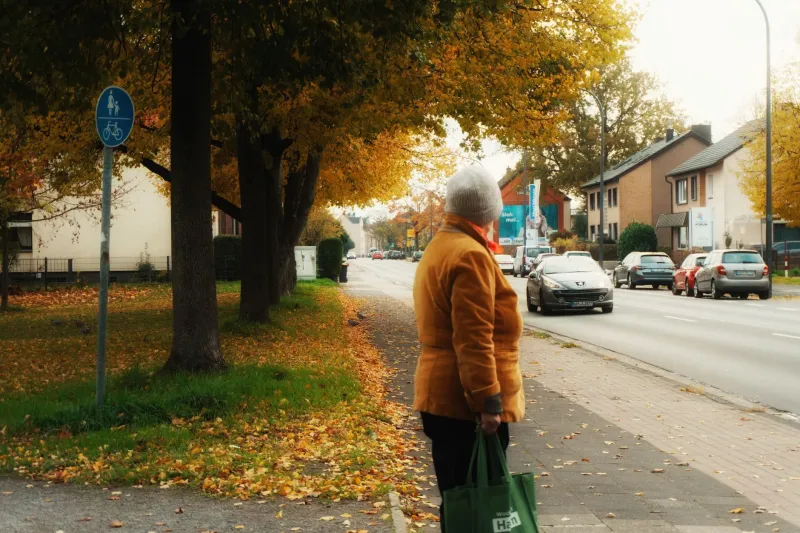
In Bostancı, walking is how people get coffee, run an errand, meet a friend, or clear their head. The streets are not a gym. They are a shared hallway. American women do not need to copy Istanbul street life to borrow that idea. A 20-minute loop around your own block can do the same job: it gets you outside, gives you a low-stakes reason to move, and leaves room for neighbors to become familiar faces.
This is not an anti-fitness argument. It is a case for keeping the entry point low. If you have been tired of optimizing everything, start with a loop you can repeat on an ordinary Tuesday.
Map a Loop, Not a Mission
Start at your front door. Walk for about ten minutes in any direction, then turn around. That is the whole plan. The first few times, pay attention to practical details: uneven pavement, blind corners, busy crossings, dogs, lighting, and whether the route feels comfortable at the time of day you will actually use it.
In US suburbs, a good loop might use sidewalks, a park path, a school track when it is open to the public, or a quiet shopping center corridor in bad weather. In cities, it might be four blocks around your apartment, a library block, or a stretch of shaded street. You are not looking for the most scenic route. You are looking for the one you will not dread.
Safety matters more than scenery. Tell someone where you are going if you walk alone, especially early or late. Keep one earbud out if you use audio. Carry your phone and ID. Choose well-lit crossings and skip routes that feel isolated after dark. If a route gives you a bad feeling, believe it and pick another one.
Make It Social or Keep It Solo
The Bostancı coffee-chat spirit applies here too: recurring, informal, and unglamorous beats elaborate and occasional. Invite a neighbor or friend to walk the same loop once a week. Conversation sets the pace naturally. You will not need a heart-rate alert to know you are moving.
Walking solo is just as valid. Think of it as a portable reset rather than a workout to log. Leave the scrolling at home, or at least keep it for the stoplight. Notice the same house, tree, or storefront as it changes. A short walk can be a useful buffer between work and home, or between one caregiving task and the next.
If you want a social version without pressure, try a standing invitation: same time, same corner, every Wednesday. People can come when they can. No RSVP chain. No performance. That is how casual habits survive.
The Health Part, Without the Hype
Moderate walking supports cardiovascular health, mood, sleep, and general daily function. You do not need a perfect pace or a special program to benefit. A simple talk test works well: you should be able to speak in full sentences, even if you are slightly breathless. If you can sing, you can pick up the pace a little. If you cannot talk, ease off.
Twenty minutes counts. So does ten. So does a shorter loop done consistently. General activity guidance for adults points toward regular moderate movement across the week, but the best routine is the one that fits your actual life. If you have a heart condition, joint problems, balance concerns, or you are returning to activity after illness or surgery, check with a clinician about what is safe for you. Stop and seek care for chest pain, faintness, or unusual shortness of breath.
And no, you do not need to track every walk. If a simple checkmark on a paper calendar helps, use it. If the app makes you feel like a failure when you miss a day, delete the app. The walk is the point, not the dashboard.
Build a Week That Survives Weather and Moods
Pick three anchors, not seven. Monday, Wednesday, and Saturday is plenty. Attach the walk to something that already happens: after morning coffee, before the school pickup, after you close your laptop. Keep shoes and a light jacket by the door so the decision is smaller.
Weather is not a moral test. In heat and humidity, walk earlier, carry water, and choose shade. In rain, a light shell and a dry pair of socks can make the difference. In ice and snow, switch to a cleared path, an indoor mall loop, or a community center track. A ten-minute minimum version is allowed. A missed day is not a character flaw.
The Point Is Not the Steps
The Bostancı lesson is not that every walk must become a social event. It is that walking can belong to ordinary life again. You are not trying to win a month. You are trying to become a person who takes a loop, notices the neighborhood, and comes home a little more human.
Start with one route. Walk it once this week. If it works, walk it again. That is enough optimization for now.