Beyond 'Let Me Know': A Block-Level Playbook for Post-Surgery Care
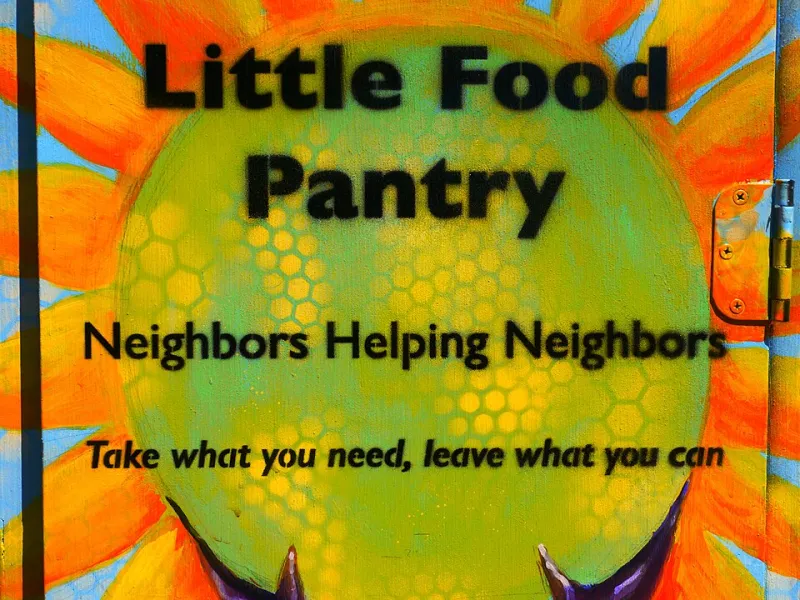
Photo: Rick Obst, CC BY 4.0, via Wikimedia Commons
A neighbor comes home from surgery, and the block does what blocks do: someone starts a group text, someone else says, 'Let me know if you need anything,' and a dozen people mean it. The trouble is that 'let me know' puts the hardest part of community care on the person who has the least energy for it. The recovering neighbor now has to remember who offered what, decide what she needs, ask for it, and coordinate the timing. That is not a favor. That is an unpaid job.
There is a better way, and it does not require a spreadsheet genius or a block captain with a clipboard. It requires a small shift: move the coordination away from the recovering person and toward a simple, shared system. Think of it as everyday health infrastructure—not glamorous, but the kind of thing that makes a neighborhood work.
The kindness gap between 'I'm here' and 'Here's Tuesday'
Most offers of help are sincere but vague. 'I'm here' sounds warm, but it does not tell a tired person whether you mean a ride on Thursday, a pot of soup, or a text check-in. Meanwhile, the recovering person may not want to seem demanding. She may not know yet what her week looks like. She may be managing pain, medication, follow-up calls, and a body that has suddenly become a full-time concern.
So the offer sits there, unclaimed. The helper wonders if she should follow up. The recovering person wonders if she should ask. Everyone is being polite, and nothing is getting done.
The fix is not more generosity. It is a little structure.
Start with one point person, not a group chat free-for-all
Before anything else, choose one person to be the hub. This can be a close friend, a next-door neighbor, a sister, or the friend who is good at logistics. The point person does not do all the work. She keeps the sign-up, answers the 'What can I do?' texts, and protects the recovering person from becoming the social coordinator.
The recovering person should be able to say, once: 'My friend Dana is keeping a sign-up. If you want to help, she's the one to ask.' That single sentence saves a dozen back-and-forth messages.
The point person also sets the ground rules. No drop-in visits unless invited. No long phone calls unless requested. No questions that require a medical explanation. The point person can say, kindly and firmly, 'She's resting. Here's the sign-up.'
Build a sign-up that asks for specific, finishable things
A shared sign-up can be a free online tool, a paper list on the fridge, or even a running note in a group text. The format matters less than the specificity. Each slot should be a small, finishable task with a time attached.
Instead of 'Meal,' write 'Thursday dinner: reheatable, no onions, drop on porch between 4 and 6.' Instead of 'Help,' write 'Saturday morning: walk the dog for 20 minutes.' Instead of 'Check in,' write 'Tuesday text check-in—no reply needed.'
Specific slots do two things. They let helpers choose what they can actually do, and they let the recovering person say yes without writing a paragraph.
What actually helps after surgery
A short list works better than an open-ended invitation. Here are the categories that tend to be genuinely useful:
- Rides with clear time windows. Follow-up appointments, pharmacy pickups, physical therapy. A ride is not just transportation; it is one less thing to solve.
- Reheatable meals with labels. Include the date, reheating instructions, and any allergens. Single portions are often better than family-size trays.
- Pharmacy and grocery runs. A specific list and a drop-off time beat a vague offer to 'pick anything up.'
- Dog walks and pet care. A 20-minute walk can be the difference between a good day and a guilty one.
- Trash bins and porch packages. Small physical chores that are easy to forget and hard to do after surgery.
- Laundry or clean sheets. Ask first; some people would rather not have someone in their bedroom. A drop-off laundry service or a load done by a trusted friend can be a real gift.
- Childcare or school pickup. Even a single afternoon helps.
- Quiet check-ins. A text that says 'Thinking of you—no need to reply' is often better than a phone call that demands conversation.
And a short list of what usually does not help: surprise drop-ins, flowers that need a vase and water, long visits, food that requires immediate cooking, and questions about surgery details. Kindness is not the same as access.
Scripts for the recovering person
Asking for help is easier when the words are already written. The recovering person can copy, paste, and edit as needed.
- 'I'm not up for coordinating right now. Dana is keeping a sign-up. If you want to help, that's the best place to look.'
- 'Yes to a ride on Tuesday. No to visitors this week—thank you for understanding.'
- 'A porch drop is perfect. Please text when you're on the way; I may be asleep.'
- 'I'm overwhelmed by texts. One check-in next week would mean a lot.'
These are not rude. They are clear. Clear is a form of care.
Scripts for helpers
Helpers can make it easier, too. Instead of asking 'What do you need?' try offering a specific, bounded thing.
- 'I can do Thursday between 4 and 6, or Saturday morning. Which is more useful?'
- 'I'm running to the pharmacy at 10. Want me to add anything to the pickup?'
- 'I'll walk the dog at 7. No need to reply—just leave the leash by the door if that works.'
- 'I'm bringing dinner on Monday. I'll leave it on the porch and text you.'
Specific offers are easier to accept than open-ended ones. They also protect the helper from overcommitting.
Keep it small, short, and finite
A recovery sign-up should have an end date. Two weeks is often enough for the acute phase; after that, needs change. The point person can check in at the end of the period and ask whether to extend, pause, or switch to occasional check-ins.
This is not about abandoning anyone. It is about making support sustainable. A neighborhood that burns out in week one is less useful than a neighborhood that shows up steadily for a month.
The Bostancı Kadın view is simple: community care is not a grand gesture. It is a series of small, specific, well-timed ones. A ride. A labeled container of soup. A dog walk. A text that does not demand a reply. When we take the coordination off the recovering person's plate, we turn good intentions into actual help—and that is what a neighborhood is for.